Sunday, 21 October 2012

My media Youtube playlist


Click the little box with the arrow next to the clock to choose the video you want to see. I wish it was easier to publish this!

Maybe it works better if you go here:
http://www.youtube.com/playlist?list=PL4zB97re_0BGVVmzfigJlgAiSHPDrUyOj

How does the BBC survive this now?


http://gu.com/p/3b9dz


The scandal at the BBC has deepened as it emerged that presenters who have had complaints raised against them have been allowed to go on working without facing any formal investigation.
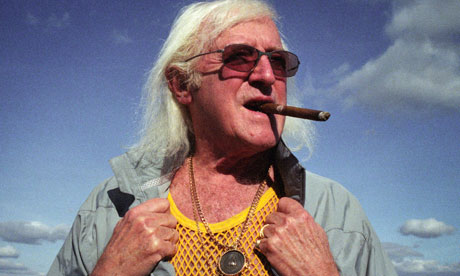
It comes as BBC bosses face accusations from senior journalists that there was a smear campaign against the victims who had come forward with accounts of Jimmy Savile's predatory sexual behaviour. The corporation is bracing itself for Monday night's Panorama, looking into why the BBC shelved an exposé of Savile's prolific sexual offending then within weeks aired a glowing tribute to the dead star.
"There are serious questions to answer," Collins said. "The story is not about Savile. The real story is how was he able to get away with abusing children, if that is what was happening, for so long. They [the BBC] were in awe of this man and were scared of him. If you allow that dominating culture to develop, all the child abuse measures in the world aren't going to stop that."

Looks like the BBC have a lot of questions to answer to try and rescue their position: it seems they protected this high-profile presenter and maybe others too, putting their own reputation and interests before those of the general public. The conclusions being approached are that the BBC are actually implicit in sex abuse, and that the dominant culture has misled us for decades. Time for this to come out in the open. Time for big changes. Celebrities, on the whole, are at best narcissistic control freaks,  At worst, dangerous sociopaths with a smug invincibility complex. Society should learn that we do not need them, nor do we need our media to honour and build them up.

Wednesday, 17 October 2012

Values in post-war Britain


http://www.telegraph.co.uk/culture/tvandradio/9567589/Ian-Hislops-Stiff-Upper-Lip-An-Emotional-History-of-Britain-BBC-Two.html


watch it here
http://www.bbc.co.uk/i/b01nhccs/

Interesting documentary about British culture and our so-called stiff upper lip (how we do not show our emotions in public). It looks at how this was represented in the media during world war 2 and how our attitudes and behaviours changed from the 1960's with the influence of American values and media.

The turning point seems to be the death of Diana. Some really interesting observations about the values and beliefs in post-war Britain. Watch it!

Sunday, 14 October 2012

Gosford Park: ideological framework and hegemony

Gosford Park: Robert Altman 2001


Interesting discourses on social relations and how they were shifting in the period between the 2 world wars.

Ruling class are dependent on working class for every aspect of their day-to-day life, even opening a flask (contrast with commodity fetishism and mystification of celebrity). Servants are reduced to slave-like identities: not allowed to use their given names and are given status according to who they are employed by. The ruling class are occupied by dinners, dressing up, shooting, social gossip. They believe their status is constant (though there is evidence of hegemony: new money vs old money: marrying wealth, inheriting status). The servants also seem to be acceptant (many have generations of history of being in service). Interestingly it's the Americans who raise this as an issue, in the nature of "research" for a film. The characters who do not belong to either class are the ones who straddle the 2 distinct groups and are not at home in either: the Americans: a jewish gay film-maker and his flirtatious actor-valet.

The shift in dominant ideology is poigniantly represented by Ivor Novello's after dinner songs: this unifies the stratified servants as they down tools to dance secretly and catch glimpses and listen to the popular music, the music of the masses, that echoes through the corridors of society. There is a feeling of the impeding pervasiveness of popular culture: a force that, within mass media, will level the playing field and present the masses with new representations, idenfication, even solidarity. The songs are about their virtues, their concerns: love, romance. Things that are "beneath" or avoided by the upper classes.

We are able to frame and judge the relations in the film by our own contemporary ideological discourses: we judge this critique of the class system by the inevitable values of fairness, equality, honesty, sincerity. The exploiters on the whole are seen as the monsters, and the oppressed as vulnerable and the ones who suffer.

It is not useful to reflect on this film's contents against one particular set of values: ultimately the director wants to make a film that sells, so he wants the film to be commercially viable: the famous cast, and well crafted dialogue and screenplay are key in this. This is a period piece but it describes the values of breaking free of bondage (ie slavery), of power becoming more democratised, of a world being modernised, of bad guys getting their comeuppance. We are scornful of corruption, expoitation of women, inequality in the work place. We believe in the power of the collective human spirit, unity through adversity, the fall of the dictators and feudal system. I have read some reviews about how these values are prevalent in the post 9-11 world: an optimism and view that the world needs to be different.

We can of course enter into a marxist discourse on class system and how the unification and humanisation of the massed workers can bring about change. We can also embark on a feminist discourse on how women are still being oppressed and abused by men in positions of power, and have to carry their secrets for fear of reprisal. In fact the servant who unwisely speaks up in defence of the patriarcial ogre hosting the weekend is dismissed without debate, when in fact she is the victim. This kind of situation still exists. This film could be read on how the balance of power may have changed, but the role of women still needs much re-evaluation.

All in all, you could say this film illustrates how a dominant ideology changes, ie hegemony. You could also say that as a film its main themes and ideas are informed by broad social values current in today's Western world.

Sunday, 7 October 2012

It's So Far Out It's Straight Down (1967)


Paul McCartney speaking about ideology in the 1960s: how the Beatles (and he) is perceived, how rules constrict creativity, how everybody has a right to live and think the way they want, embracing new outlooks and new values. Subversive: but coming from an important public figure such as himself, this is an influential message.

Magical Mystery Tour (Beatles film from 1967)


http://www.theartsdesk.com/new-music/arena-beatles%E2%80%99-magical-mystery-tour-revisited-bbc-two

Badly received as it challenged the ideological framework of what a film should be. There is no script, no narrative. And for these reasons, among others it is a very important and groundbreaking film. As McCartney puts it: "The kids got it, the adults didn't'!"

Interesting though that it contains and reflects the ideological values of 60s/50s British society; On the one hand the psychedelic drugged up view of the world, on the other the working class Englishness of tug of war, village fetes, coach trips etc.

Watch the documentary:
http://www.bbc.co.uk/i/b01nd5qd/

Watch the film:
http://www.bbc.co.uk/i/b01nbz1s/

Monday, 1 October 2012

The Name of the Rose


http://en.wikipedia.org/wiki/The_Name_of_the_Rose
http://en.wikipedia.org/wiki/The_Name_of_the_Rose_(film)

The story of a missing book within a film (post-modernism).
A title full of symbolism, but actually what does it signify here?

Tension and plot provided by opposition and symbolism: a brooding building on a hill in snowy mid-winter looking down on a peasant village. But who is more debased?

Black monks vs white.
Darknesss vs light
The insane are open and honest, the sane are secretive and conspire.
The old is wise, the young naive.
The young are beautiful victims, the old are ugly villains.
The novice's gaze of wonder and awe (white face, open mouth, clean shaven, starry eyed, the grizzled myoptic world weary gaze of Sean Connery.
Women in minority. Women as corruptor, then victim. Dirty, soiled, dangerous, temptress.
The thaw as the protagonists end their mission.


Papal legate as metonym of Catholic Church and all that is evil
A labyrinth
A foggy location full of secrets/mysteries
Books locked away (knowledge, secrets)
A book about comedy, in a place where there is no laughter.
Fire as hell, fire as an essential force

Paradox: charity = rubbish
Sin provides knowledge (sex scene)
Carnal knowledge vs cognitive knowledge

Words (symbols) are the crime
Enquiry into the power of the media
Censorship
Media control